
Limit Orders vs Market Orders in Prediction Markets
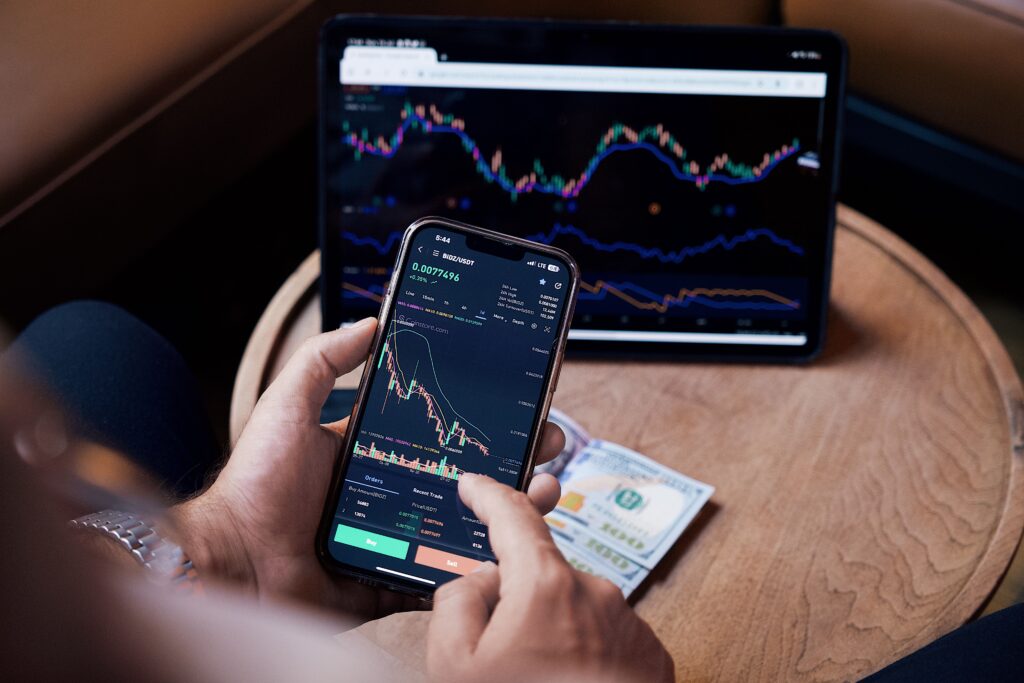
Every trade on a prediction market platform like Kalshi or Polymarket starts with a decision. You can accept the price offered at that moment, or you can name your own price and hope that the market comes to you.
Paying the price offered is a market order. Naming your price and waiting is a limit order.
Both platforms run on a central limit order book, with contracts priced in cents between zero and one dollar, and that one choice determines how fast you trade, what your trade costs, and sometimes whether you place a trade at all.
Market vs Limit Order: What Actually Changes
A market order buys or sells immediately at the best available price. Execution is guaranteed, but the price is not.
A limit order inverts that guarantee. You set the number you’re willing to pay, and the order fills at that price or better when available, or not at all.
Makers, Takers, and the Order Book
Both platforms match buyers and sellers on a central limit order book, the live list of every resting offer to buy and sell a contract for a market.
A market order reaches across that list and takes whatever price is sitting there. Traders who place market orders are called takers. A limit order that doesn’t fill instantly joins the list and waits, which makes you a maker, one of the people whose offers create the prices everyone else sees.
But the difference starts costing you money the moment size comes into play. A market order big enough to exhaust the best price level (the best offer currently on the book) keeps filling at the next level, and the one after that.
Example A. A market order, with enough contracts at the best price.
Say you want 100 contracts of a market, and the best price the market is offering them at is 50 cents. If 100 or more are sitting on the order book at 50 cents, your market order fills at 50 cents, the price and size you wanted, instantly.
Example B. A market order, without enough contracts at the best price.
Now say only 70 contracts of that market are available at 50 cents each. Your market order of 100 takes all 70, then keeps going. The last 30 fill at whatever the next seller is asking. If that’s 55 cents, those last 30 cost you 5 cents more apiece, and your blended price (the average cost per contract across all 100 contracts) is now 51.5 cents. Not the 50 cents you saw on the screen.
That gap is called slippage. In this example, the slippage is 1.5 cents per contract, or $1.50 on a 100-contract order, paid for the privilege of not waiting. And that cost comes straight out of the trade, because a contract bought at 51.5 cents pays you 48.5 cents instead of 50 when it resolves.
How much slippage stings a taker depends on the book. In deep markets, liquidity stacks the orders a cent apart with size at every level, the bid-ask spread stays narrow, and a market order rarely wanders far from the on-screen price. In thin markets, where the next offer sits further away, slippage can get expensive, and fast.
Example B again, this time with a limit order.
Limit orders prevent slippage. Set your limit order at 50 cents against that same book, and the first 70 contracts fill instantly at 50. The other 30 contracts don’t chase. Instead, they rest on the book as your bid, waiting for a seller to come down to your number. You either get them at 50 cents, or you don’t get them at all.
Waiting is Cheaper
Prediction platforms build their fee schedules around the same idea: the trader in a hurry pays, and the trader willing to wait pays less or nothing.
On Polymarket, the rule is absolute. Makers are never charged; only takers pay. The taker rate varies by category, with geopolitics markets fee-free, politics and finance at 4%, sports and most other categories at 5%, and crypto topping out at 7%, applied as fee = shares × rate × p × (1−p). Even at the highest rate, that caps out at 1.75¢ per contract on a 50-cent market, and falls off toward the extremes.
On Kalshi, resting orders are much cheaper, but still not free. The taker fee is 7% × p × (1−p), or 1.75¢ per contract at 50 cents. The maker fee is exactly a quarter of that, 1.75% × p × (1−p), or about 0.44¢ at the same price.
Numbers vary by platform and market, but the direction is the same. Being in a hurry costs money.
And the fee schedule is only half the savings. Buy with a market order, and you also pay the spread, because taking a contract right now means paying the ask price, the higher of the two on screen. A limit order placed between the bid and the ask sidesteps that entirely, and if a seller comes down to meet you, those cents stay in your pocket. On a contract trading in the 40s, a few cents saved plus a cheaper fee is real money compared with what the trade can pay out.
When a Market Order is the Right Call
None of this makes the market order a mistake. Speed is worth paying for whenever being in the trade matters more than the last few cents. If news is breaking and a market is about to reprice, a limit order that never fills saves you a fee but costs you the entire trade opportunity. In a deep, busy market, liquidity usually pulls the bid and ask within a cent or two of each other, so going fast can cost little more than waiting would.
A simple way to choose between the order types:
- Limit when the spread is more than a cent or two wide. Crossing a wide gap is a cost you can refuse to pay.
- Limit when your trade is large relative to the market, so your own order doesn’t chase the price up the book.
- Market when news is moving and the opportunity cost of missing the fill is more than the fee + the spread.
- Market in busy markets with narrow spreads, where there’s barely any gap left to pay for.
It is a trade-off you cannot avoid.
Every order type is a trade between two kinds of certainty. A market order guarantees the fill and takes its chances on the price. A limit order guarantees the price but risks the execution.
The trader who always demands instant fills bleeds fees and spread over time. The trader who always insists on a better price may watch winning trades pass by unfilled. Knowing which certainty the moment calls for is the actual skill.