
Inside Kalshi’s Record World Cup Run: 3 Million New Users, $12 Billion Traded
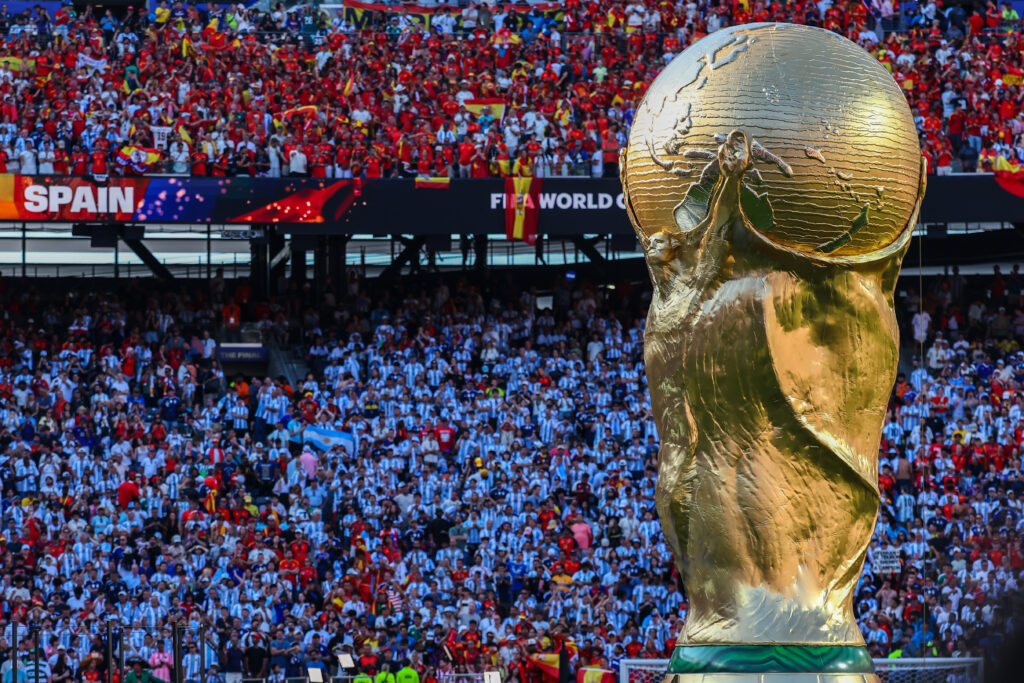
Spain‘s players were still celebrating on the pitch at MetLife Stadium on Sunday night when Kalshi‘s marketing team had already moved on to counting a different kind of scoreline: 3 million new users.
That’s the number Kalshi shared with CNBC once the World Cup wrapped, and it puts a hard figure on something the prediction market industry had been talking about for weeks: this tournament turned into the biggest single event the category has ever seen.
How the World Cup Became Kalshi’s Biggest Market Yet
Kalshi’s contract asking traders to name the World Cup winner settled Sunday, after Spain beat Argentina 1-0 in the final. Before it closed, that single market had moved more than $1.2 billion, a record for any individual contract on the platform, according to CNBC. Total activity tied to the tournament reportedly crossed $12 billion across the six weeks of play.
Kalshi wasn’t alone. Polymarket‘s own World Cup winner market had already topped $4 billion in cumulative volume days before the final, making it the largest single market in that platform’s history, Fortune reported.
What Prediction Markets Actually Do
Prediction markets let users buy and sell shares tied to the outcome of a real event. Pick Spain to win, and that share is worth a dollar if Spain lifts the trophy, and nothing if they don’t. In between, the price moves up and down as goals go in and news breaks, the same way a stock reacts to an earnings report. A 48-team, month-long tournament with new results every day gave that price plenty of reasons to move.
Why Soccer Pulled In So Many New Users
Soccer global reach is exactly why Kalshi treated the World Cup differently from other events on the calendar. Vijay Viswanathan, an associate dean at Northwestern University, told CNBC that few events on the planet reach as many countries as international football does, calling it a market with no real equivalent.
A Marketing Push That Went Past the Pitch
Kalshi leaned into that reach with a mix of soccer names and outsiders.
It partnered with OpenAI so its World Cup odds would surface inside ChatGPT searches, worked with Croatian star Luka Modric and coach José Mourinho, and struck a deal with the Argentina national team that landed the platform in a Lionel Messi Instagram post. It also ran ads with actor Timothée Chalamet and singer J Balvin, reaching fans who had never opened a prediction market app before. CEO Tarek Mansour summed up the approach to CNBC: “Our volumes are where the news is at.”
The Harder Part Starts Now
Growing a user base during a global final is one thing. Keeping it is another. Kalshi has already seen trading volume drop on days without a match, and Mansour has said that pattern tends to repeat after big events, with activity picking back up once the next major story arrives.
Regulators Are Still Watching Closely
That growth comes with scrutiny attached. Several states argue that sports-related contracts should fall under the same oversight they apply to other regulated gaming, while Kalshi maintains only the CFTC has the authority to regulate them federally. The dispute is already in federal court: the CFTC sued Kentucky in June over the state’s enforcement actions against prediction market platforms, one of several such lawsuits the agency has filed this year. Attorney Brian Sung of Haynes Boone told CNBC the ad push probably won’t sway how judges rule, but it does shape how the public sees the industry.
What Comes After the Final Whistle
Spain’s players will get their parade through Madrid this week, and then the tournament truly ends. For Kalshi, the final whistle wasn’t the finish line. It was the start of a much longer game: proving that 3 million new users showed up for more than just penalty kicks.