
U.S. and Iran 14-point deal: Polymarket reacts with massive surge
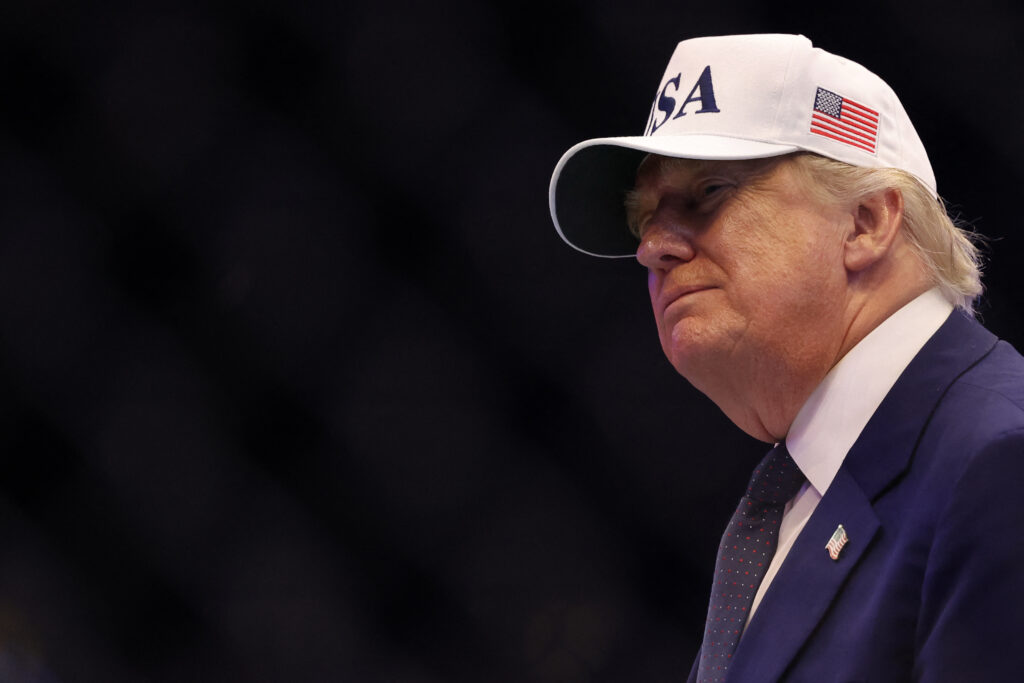
After months of tense negotiations, the United States and Iran have finally signed an initial deal to put an end to the war. Both President Trump and Iran’s Supreme Leader, Motjaba Khamenei, have a different take on the result, as they frame the decision as a victory for their respective countries.
Let’s analyze the 14-point agreement and how prediction markets are reacting to this major global development.
The agreement that opened the Strait
Last Wednesday, June 17, President Donald Trump attended the Palace of Versailles to sign a memorandum of understanding alongside Iranian President Masoud Pezeshkian. The document lays out the terms for ending the war and reopening the Strait of Hormuz, the focal point of every geopolitical conversation for the past few months.
The details of the 14-point agreement were not immediately released, but much was speculated about the different concessions that each nation had to make to reach common ground.
Finally, US Central Command has confirmed that the naval blockade on all maritime traffic entering and leaving Iranian ports has been lifted. The official statement says “all US military blockade enforcement efforts have ceased.”
Furthermore, it asserts that U.S. forces are no longer impeding the transit of vessels in the Gulf. However, the document also specifies that American naval ships will remain in the general area to make sure that all aspects of the agreement are adhered to.
Framing the news
As the news of the agreement and the lifting of the blockade reached the mass media, both nations tried to frame their decisions as an unconditional victory.
President Donald Trump made a series of posts on Truth Social, expanding on some of the main points of the agreement. “Oil is flowing, Iran can never have a nuclear weapon (the world will be safe), the stock markets are roaring,” he wrote. As for the future of the war effort, they concluded that a “complete ceasefire on all fronts, including Lebanon, Hezbollah and Israel” is to be expected.
On the other hand, Iran’s Supreme Leader Motjaba Khamenei published a message on Iranian media informing his people about the agreement. “As you have been informed, a memorandum of understanding was signed between the presidents of Iran and the United States of America.”
The crucial part of his statement is where he accuses Trump of acting out of fear: “Of course, it was the American president who, out of desperation, used all kinds of leverage to bring this about.”
What’s in the US-Iran deal
According to the 14-point memorandum of understanding signed at the Palace of Versailles, the U.S. is expected to lift sanctions on Iran and unfreeze assets linked to the country’s regime. This will also allow Tehran to immediately sell its oil freely, something that President Donald Trump referred to in his Truth Social posts.
The current agreement declares an intent to bring about an immediate and permanent termination of military operations in the U.S.-Israeli war with Iran. To accomplish this point, both sides committed to further talks toward a “final deal” within 60 days, which will be extendable with mutual consent.
The memorandum stipulates that the Strait of Hormuz will reopen, with Iran agreeing to allow the passage of commercial vessels free of charge for 60 days. This will be followed by negotiations with Oman to establish a strong administration of that vital trade route.
Then, there’s the always tense nuclear issue. On paper, Iran affirms that it shall not procure or develop nuclear weapons with a mechanism to be “mutually agreed” upon relating to its “enriched material” stockpile. If Iran does agree to destroy its enriched stockpile, it would be a major victory for the Trump Administration.
Meanwhile, the U.S. will put an end to all types of sanctions, making fully available to Iran all restricted funds and assets.
Prediction markets are already reacting
The memorandum prompted massive movements within several markets. At Polymarket, the “Iran agrees to end enrichment of uranium by June 30?” has experienced a massive surge, peaking at 69% of implied probability right after the news of the deal.
The market rules state that the market will resolve to Yes if Iran publicly agrees to end all enrichment of uranium, and the signing of the memorandum seems like a massive step in that direction.
Meanwhile, the “Iran leader end of 2026” market has reached a point of near certainty regarding the continuation of Mojtaba Khamenei’s leadership. The 14-point agreement leaves little room for other contenders, as most contrarian traders were speculating on a high-profile death prompted by the war.
Finally, a market that has experienced notable movements is the “Where will the next US-Iran diplomatic meeting happen?” market, which has already amassed more than $13 million in trading volume. Currently, traders are convinced that the future meeting will be held in Switzerland, arguing that the historically neutral country is the perfect place for such an event.
However, contrarian traders are putting money on the “No meeting by June 30” Yes shares. Qatar, Pakistan and other European countries appear as low-tier positions that might have a massive upward repricing as the news develops.