
Inside the Giant Machinery of the 2026 World Cup Openings
It has never happened before.
In every previous World Cup, the footballing world shrank into a single, sacred coordinate: one host country, one stadium, one opening breath. This time, the tournament rejects unity, expanding instead into an untethered ecosystem across three vast nations.
The planet does not hold its breath; it exhales simultaneously across thousands of miles, deploying half the global music industry to mask the sheer, unprecedented scale of the machinery.
The 2026 World Cup arrives as the largest corporate and sporting caravan in history: 48 squads, 16 urban stages, and 104 matches scattered across Mexico, Canada, and the United States over 39 relentless days.
To inaugurate this behemoth, a single ceremony is no longer enough. Instead, viewers will witness a trilogy of 90-minute spectacles, each rooted in its own national aesthetic, attempting to stitch together a globe-spanning music festival under the pretext of a ball rolling.
With the matches finally getting underway, the digital colosseum is already vibrating. Prediction markets on platforms like Kalshi and Polymarket are rapidly shifting, as global forecasting trends and algorithmic speculation track every variable of the biggest, and perhaps most complex, show on Earth.
Mexico First: The Weight of Myth
The journey begins on Thursday, June 11, at Mexico City’s legendary Estadio Azteca: a colosseum that now stands alone in history, hosting its third opening match.
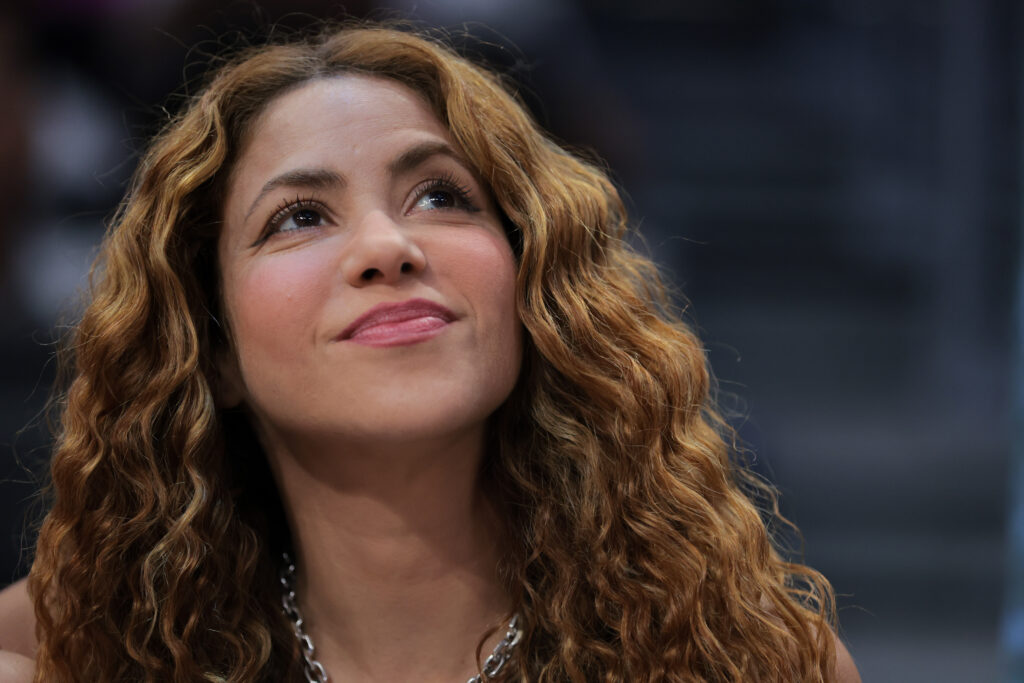
Before Mexico steps onto the grass to face South Africa, the turf belongs to pop royalty. Shakira and Burna Boy will deliver the live debut of “Dai Dai,” the tournament’s official song, backed by a generational mosaic of Latin soundscapes featuring Alejandro Fernández, J Balvin, Maná, and Lila Downs.
The afternoon will also reveal “DNA,” an anthem that epitomizes the tournament’s disjointed diversity. It is a sonic collage blending the operatic gravity of Andrea Bocelli, the electronic pulse of David Guetta, the aggressive bars of Megan Thee Stallion, and Korean verses penned by EJAE, the Oscar-winner from Kpop Demon Hunters.
The Northern Expansion
On Friday, June 12, the spectacle fragments further, unfolding simultaneously in Toronto and Los Angeles. At BMO Field, Canada anchors its celebration in multiculturalism. Alanis Morissette pulls double duty, leading the artistic lineup while interpreting the national anthem, alongside Michael Bublé, Alessia Cara, and international textures provided by Elyanna and Nora Fatehi.
Hours later, the sun sets over SoFi Stadium in Los Angeles for the American curtain-raiser. Katy Perry headlines a glossy pop tier featuring Anitta, Future, and LISA, while actor Jason Sudeikis steps out of his fiction to welcome the masses to a stadium housing a gleaming, oversized replica of the World Cup trophy.
The Fragmented Soul of Gigantism
Yet, behind this hyper-produced, three-headed festival designed by Marco Balich, lies a deeply fractured reality.
While the creative directors orchestrate pristine visual motifs of papel picado and inclusive mosaics, the streets outside whisper a different story. In Mexico City, striking teachers march under the shadow of thousands of security forces acordoning the Azteca.
This is the paradox of the modern game: a tournament so colossally large that it risks drowning its singular, popular soul in the cold waters of corporate gigantism. Yet, history has taught us that the green grass functions as an altar capable of filtering out the noise of executive boardrooms. Decades ago, Diego Maradona, perhaps the ultimate embodiment of football’s raw, chaotic, and beautiful soul, uttered a phrase that became an eternal dogma: “La pelota no se mancha” (the ball does not get stained).
No matter how heavy the political friction, or how corporate the packaging is, the sport itself remains untainted. When the opening whistle finally blows, the game sheds its bureaucratic armor. A World Cup, by some mystical, unexplainable inertia, always rescues its immaculate core, igniting an uncorrupted passion among those who simply live to see the ball roll.