
Nevada Regulator Warns Prediction Markets Could Lead to Online Casinos in Every State
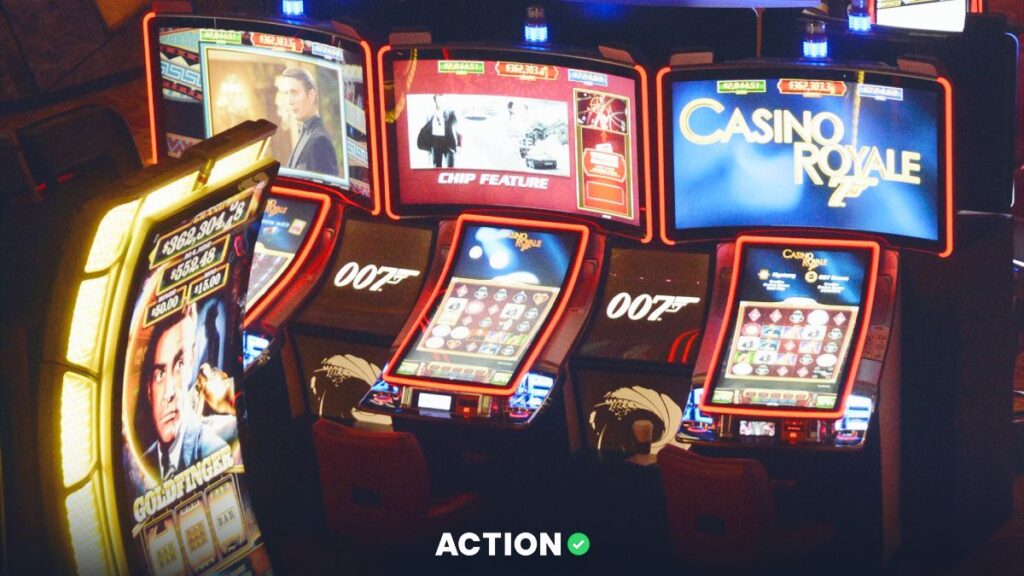
Picture a small town that has never allowed a casino, not one slot machine within its limits. Now picture a storefront a few doors from the town’s only church, lit up at night, running games that look exactly like a casino floor: legally, under a federal license nobody there voted on.
That’s the scenario one of the country’s most influential gaming regulators laid out last week, and it starts with something far smaller than a slot machine: a contract on who wins a soccer or football game.
What Exactly Are Prediction Markets?
Prediction markets are online platforms where people trade contracts tied to the outcome of a real-world event: an election, an interest-rate decision, or, this month, a World Cup semifinal. Prices move constantly, rising or falling as new information comes in, not unlike how a stock reacts to an earnings report.
Kalshi and Polymarket are the two largest platforms in the U.S., both registered with the Commodity Futures Trading Commission (CFTC), the federal agency that also oversees derivatives markets. That registration sits at the center of an ongoing debate: is a contract on a sports outcome a financial product, or gambling with a new coat of paint?
Why These Markets Have Taken Off
Whatever the answer, the growth speaks for itself. Sports contracts drive most of the volume, and the FIFA World Cup has become the biggest test yet of that model. With the world’s four top-ranked teams all still alive heading into the semifinals, trading has climbed to levels these exchanges had never touched before, as Prediction Pro broke down earlier this week.
For a fast, mobile-first way to react to a game as it happens, prediction markets have become the format plenty of fans reach for first: and that appetite is exactly what’s fueling the fight over where these platforms fit into existing law.
Nevada’s Warning: A Three-Act Path to Online Casinos
Speaking at a gaming-legislators’ summit in San Diego, Nevada Gaming Control Board chairman Mike Dreitzer laid out a three-part progression for the industry. Act one, already underway, is sports contracts. Act two would be online casino-style products offered nationwide, outside any single state’s licensing system.
Act three would see those products migrate into physical terminals that look and function like slot machines, the way Historic Horse Racing terminals already do in states that otherwise ban slots. Dreitzer said he’s seen products claiming to run on event-contract outcomes rather than standard random-number generators, picturing “prediction lounges” popping up well outside casino markets, even “right next to a church.”
The Bigger Fight: Who Gets to Regulate These Platforms?
Nevada isn’t alone in this. New York, Ohio, Arizona, and Minnesota have all taken legal action against prediction platforms, arguing sports contracts belong under state gaming law, not federal commodities law. The CFTC has pushed back with suits of its own, arguing Congress gave it exclusive authority here, and Nevada has secured court orders limiting market access in the state while its case moves through appeal.
The platforms see it differently: Kalshi describes itself as “a federally regulated exchange,” and both companies say they have no plans to build contracts around games of pure chance like slots or roulette.
What Happens If Nevada’s Forecast Plays Out?
Dreitzer framed his concern as process, not principle.
Nevada isn’t against innovation, he said, the state is reviewing a prediction-style product it believes already fits its rules, but he wants new products built inside licensing systems designed to protect consumers, not around them. Whether his three-act forecast plays out is still an open question, one that may land before the Supreme Court before it’s settled in any statehouse.
That storefront a few doors from the church is, for now, still hypothetical. Whether it stays that way may depend less on how many fans trade on tonight’s match than on how courts define the word “gambling.”