
Delaware County, PA Bans Poll Workers from Election Prediction Markets
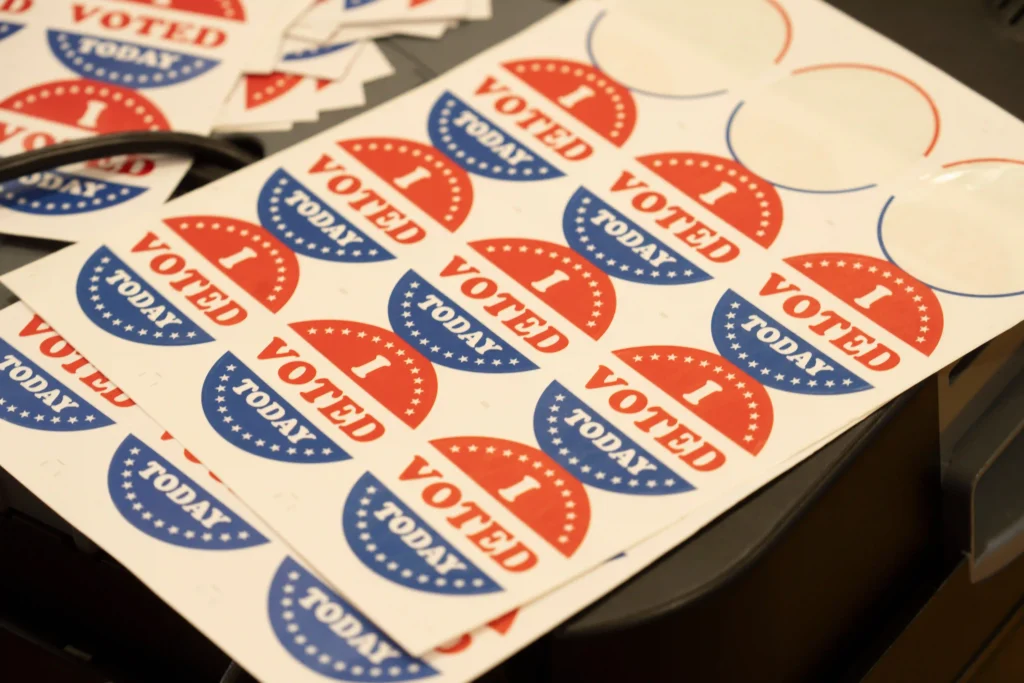
A suburban Pennsylvania county has taken what may be an unprecedented step in election administration, explicitly banning its poll workers from participating in prediction markets tied to election outcomes. Delaware County’s board of elections recently approved a resolution amending the oath poll workers must take before serving, adding a specific prohibition about the use of these increasingly popular financial platforms.
The move reflects growing anxiety among election officials about the intersection of financial markets and democratic processes and comes at a moment when the legal status of prediction markets is being fought out in courtrooms across the country.
What are Election Prediction Markets?
Prediction markets allow users to take financial positions on real-world outcomes from sports to geopolitics to elections. Traders now spend about $5 billion each week on websites like Kalshi and Polymarket, according to Dune Analytics, which tracks trading volumes. Users can trade on who will win gubernatorial races, which party will control the Senate, and even individual primary contests.
Delaware County Draws a Line
Delaware County Elections Director Jim Allen didn’t mince words about his motivation for pursuing the ban. “I think they’re a pernicious, horrible factor and I don’t think elections should be bet on in one shape or form,” he said. “The last thing we need is the referee in elections being accused of having a financial stake in these so-called prediction markets.”
Under Pennsylvania law, poll workers are already prohibited from directly or indirectly trading on election results. Delaware County is going a step further by naming prediction markets explicitly in the oath, a move that appears to be without precedent among Pennsylvania counties, and possibly nationally.
Jennifer Morrell, CEO of The Elections Group, said she wasn’t aware of any other jurisdiction taking similar steps, though she pointed to Maryland as a state grappling with the same concerns. Maryland’s state board of elections recently issued a statement advising that use of prediction markets for election wagers, at best, violates the spirit of state law and could, at worst, carry criminal penalties.
Morrell identified two distinct but related dangers. The first is a straightforward conflict of interest: prediction markets could create financial incentives to influence outcomes rather than simply predict them. The second is more philosophical. “If we make votes become like a financial instrument, then it really degrades the character of those votes,” she said. “Now we’re shifting the framing from who should lead to who will win, and that’s a very different question.”
The National Legal Battle Rages On
Delaware County’s action comes amid an escalating national fight over how to regulate prediction markets. Arizona Attorney General Kris Mayes filed a 20-count criminal information against Kalshi in March 2026, alleging it accepted trades from Arizona residents on a wide range of events in violation of state law, including four counts of election wagering covering races from the 2026 Arizona gubernatorial contest to the 2028 presidential election.
Arizona’s prosecution marked the first-ever criminal charges in the U.S. against a major prediction market company. Kalshi has denied wrongdoing, maintaining that it operates as a federally regulated financial marketplace, not a gambling operation, and should answer only to the Commodity Futures Trading Commission, not state authorities.
The case took another dramatic turn in April. A federal judge temporarily barred Arizona from enforcing its gambling laws against prediction market operators and put the brakes on the criminal case against Kalshi, concluding that the federal Commodity Futures Trading Commission had sufficiently shown that “event contracts” fall within the Commodity Exchange Act’s definition of “swaps” and demonstrated a reasonable chance of success in showing that the act preempts Arizona law.
The broader litigation and enforcement fight now spans roughly 20 federal and state actions across at least 14 states. The outcome could set a significant precedent for whether states can enforce their own gambling laws against federally regulated prediction markets.
Adding a political dimension to the controversy, Donald Trump Jr. is an adviser for both Kalshi and Polymarket and an investor in the latter, and Trump’s social media platform Truth Social is also launching its own cryptocurrency-based prediction market called Truth Predict.
The Legislative Landscape in Pennsylvania for Prediction Markets
Pennsylvania lawmakers have begun to take notice. State Rep. Danilo Burgos of Philadelphia has announced plans to introduce legislation regulating prediction markets, while State Sen. Lindsey Williams of Allegheny County has proposed measures to address the risk that public officials could use non-public information to profit through these platforms. Neither bill has been introduced yet.
That legislative gap is exactly what concerns Allen. With elections continuing while rules remain unsettled, he argues local action is necessary. “We have the Wild West out there on this front, and we need to do something to prevent it from seeping into the election process,” he said.
Delaware County’s move may be modest in scope, covering only its own poll workers, without the force of state law, but it signals that election administrators are not content to wait for legislators to catch up with a fast-moving industry.