
Former New York Representative George Santos Reportedly Under Investigation for Insider Trading
Prediction markets can be a great equalizer: a place where collective wisdom beats the experts, and the best-informed trader wins. But some traders are more informed than others. Over the past two months, federal regulators have opened or formalized cases against three individuals accused of doing what markets cannot tolerate: trading on information no one else was allowed to have.
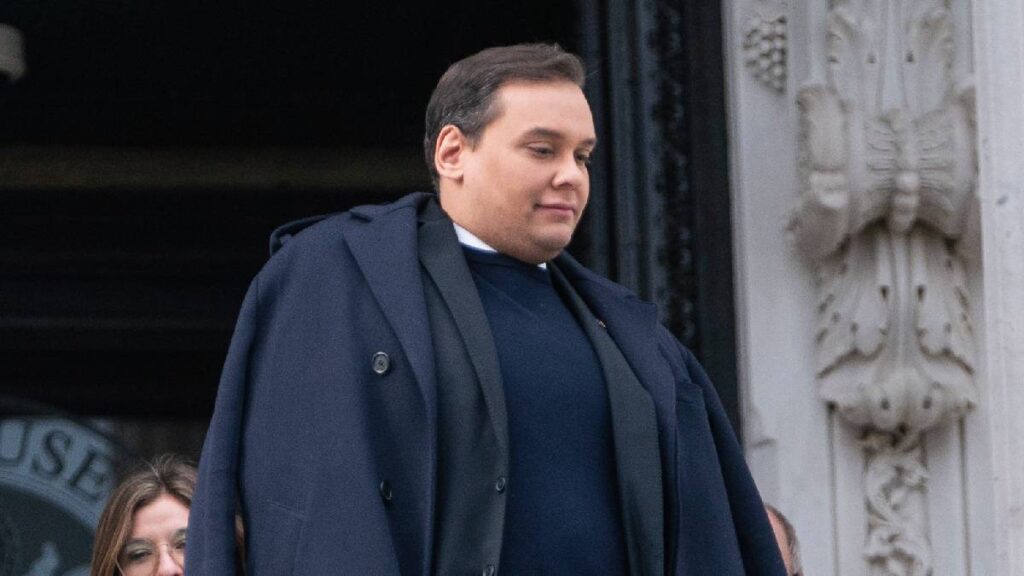
Former New York Representative George Santos finds himself at the center of a federal investigation exploring the legal boundaries of modern prediction markets.
Federal regulators are investigating Santos for potential insider trading on Kalshi after the event-contract platform flagged suspicious activity tied to Santos’ schedule. This unfolding drama highlights a growing trend of authorities cracking down on individuals utilizing nonpublic knowledge to gain an economic edge.
The former New York congressman has made a career out of defying expectations: first by inventing the bulk of his professional background, then through a guilty plea to fraud and identity theft charges, which ultimately led to a brief four-month prison stay before Donald Trump commuted his seven-year term.
Since his release, Santos had found a second act as a political influencer and, notably, as a paid promoter for Polymarket, one of the two largest prediction market platforms in the world.
That relationship is now over.
Polymarket announced it was terminating its contract with Santos following reports that he is under federal investigation for possible insider trading, not on Polymarket, but on Kalshi.
The Alleged Scheme
In February, Santos publicly announced he would attend President Trump’s State of the Union address. Around the same time, according to sources familiar with the matter, he placed trades on Kalshi predicting that he would not attend. The night of the speech, he posted on social media: “Watching SOTU from an airport TV was not part of the plan! FML.” Kalshi flagged the trades as suspicious and referred them to both the Commodity Futures Trading Commission (CFTC) and the Justice Department.
Santos dismissed the allegations as preposterous, yet the Commodity Futures Trading Commission (CFTC) and the Department of Justice are reviewing whether these maneuvers amounted to deceptive market behavior. The CFTC has explicitly stated that traditional rules against financial misconduct apply fully to the prediction ecosystem.
Understanding Insider Trading in the Modern Era
To appreciate the gravity of these investigations, it helps to understand what insider trading actually means in this evolving landscape.
Traditionally, it involves buying or selling assets based on material, nonpublic information obtained through a breach of trust. In standard stock markets, this protects everyday investors from being exploited by corporate insiders who possess secret data. Within prediction markets, the legal framework relies heavily on the misappropriation theory, where individuals misuse confidential details entrusted to them to profit off event outcomes.
Why is this practice harmful? It fundamentally undermines market integrity.
When participants with direct control over an outcome, or exclusive access to data, manipulate public perception while holding financial positions, the playing field becomes entirely unfair.
Legal experts note that Santos’ alleged actions might technically lean closer to market manipulation than classic insider trading, given that he was trading on contracts involving his own personal behavior rather than stolen corporate data. Regardless of the exact label, using a public platform to alter the odds of an event you directly influence opens the door to severe civil penalties and trading bans.