
Prediction Market Maker and Taker Fees Explained
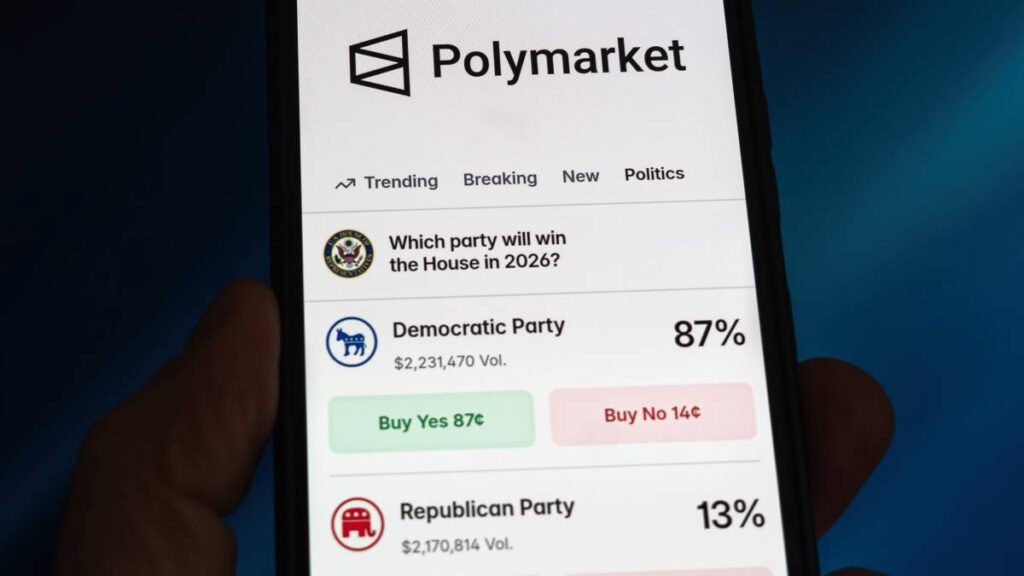
Maker/taker fees are a common trading-fee structure used by traditional exchanges, crypto exchanges, and order-book-based prediction markets. The model distinguishes between traders who add liquidity to a market and traders who remove it.
What Is a Maker?
A maker places a limit order that does not immediately fill. Instead, the order rests on the market’s order book until another trader accepts it.
Because that resting order gives other traders an available price at which to buy or sell, it adds — or “makes” — liquidity.
Example: You place an order to buy “Yes” shares at 47¢. If no seller immediately accepts that price, your order remains on the book. You are acting as a maker.
What Is a Taker?
A taker places an order that immediately matches with an existing order on the book. This can be a market order or a limit order priced aggressively enough to cross the bid-ask spread.
Because the trade consumes an order that was already available, it removes — or “takes” — liquidity.
Example: You buy shares at the current best asking price, and the trade fills immediately. You are acting as a taker.
Every completed trade has a maker on one side and a taker on the other.
Benefits of Being a Market Maker
Market makers can trade event contracts without paying fees when they place resting orders. Kalshi waives fees on many resting orders to encourage more market-making activity and improve liquidity.
Market makers may also be able to earn a guaranteed profit by placing limit orders on both sides of a contract. For example, a trader might place orders to buy both Yes and No contracts at prices that add up to less than $1.
If both orders fill, the trader owns one Yes contract and one No contract. When the market settles, one contract pays $1, and the other pays $0. Because the combined purchase price was less than $1, the difference is a guaranteed profit before considering any applicable fees or order-fill risks.
Benefits of Being a Market Taker
Market takers can enter a trade immediately. Unlike market makers, they do not wait for another trader to match a resting order. Instead, they accept an order that is already available on the order book.
This can be useful when a trader has a strong opinion about an event and wants to act quickly.
Additionally, takers do not need to decide where to place a competitive resting order. They can review the available buy and sell prices, then choose the order that offers the best available price for their trade.
Why Maker/Taker Fees Exist
Prediction-market platforms use maker/taker pricing to encourage deeper and more active markets.
- Makers often pay lower fees than takers, may pay no fee, or may qualify for rebates.
- Takers may pay higher fees because they receive immediate execution.
- More resting orders can create tighter spreads and more available contract depth.
The distinction matters in prediction markets because less-popular events can have relatively thin order books. Incentivizing makers can help traders find better prices and execute larger orders more easily.
How Fees Are Calculated
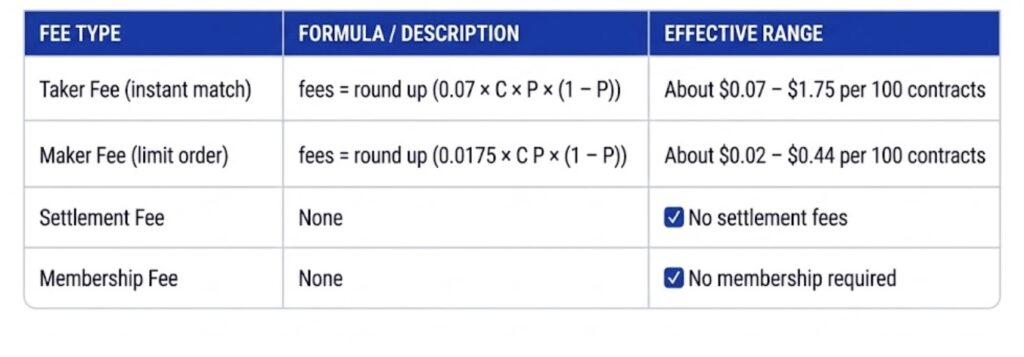
On some platforms, trading fees depend on the number of contracts, the contract price, and whether the trade adds or removes liquidity. A commonly used structure is:
Fee= Rate × C × p × (1−p)
Where:
- C is the number of contracts or shares traded
- p is the contract price in dollars
- Rate is the platform’s stated fee coefficient
This type of formula produces its highest unrounded fee at 50¢, when the market implies a 50% probability. Fees typically decline as a contract approaches 0¢ or 100¢.
Kalshi and Polymarket Fees
Kalshi’s standard taker-fee formula has commonly been presented as:
0.07 × C × p × (1−p)
At a 50¢ contract price, that equals an unrounded 1.75¢ per contract. Kalshi may charge maker fees in certain designated markets, typically at a lower rate, so traders should review the current fee schedule before placing an order.
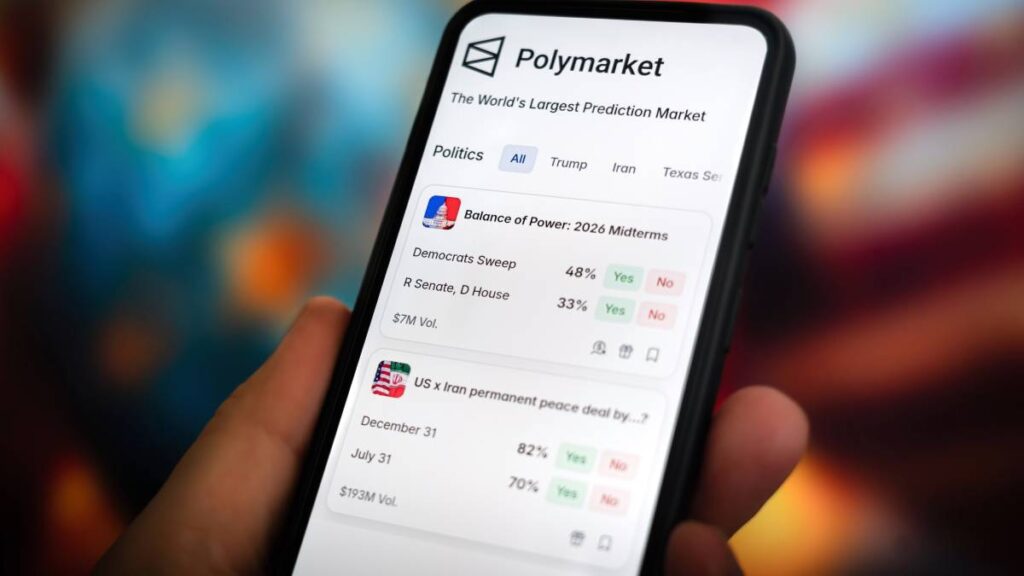
Polymarket’s published fee schedule lists category-based taker-fee rates. Crypto markets carry a 0.07 coefficient, while finance, politics, and tech are listed at 0.04. Sports, economics, culture, weather, and general markets are listed at 0.05; geopolitics markets are fee-free under the published schedule. Makers are charged a zero fee in the listed categories, with eligible makers receiving rebates funded by taker fees.
What It Means for Traders
Using a resting limit order may reduce your explicit trading costs and, on certain platforms, may make you eligible for a maker rebate. Market orders and immediately filled limit orders can be more convenient, but they generally classify as taker activity and may cost more.
Remember that fees are only part of execution cost. The bid-ask spread is an additional, indirect cost: buying at the ask and selling at the bid can reduce your return even when platform fees are low.
In short, maker/taker fees reward traders who supply liquidity and charge more to traders who demand immediate execution. Always confirm the current fee schedule for the specific platform and market category before trading.