
Senate Bans Members, Staff from Prediction Market Trading
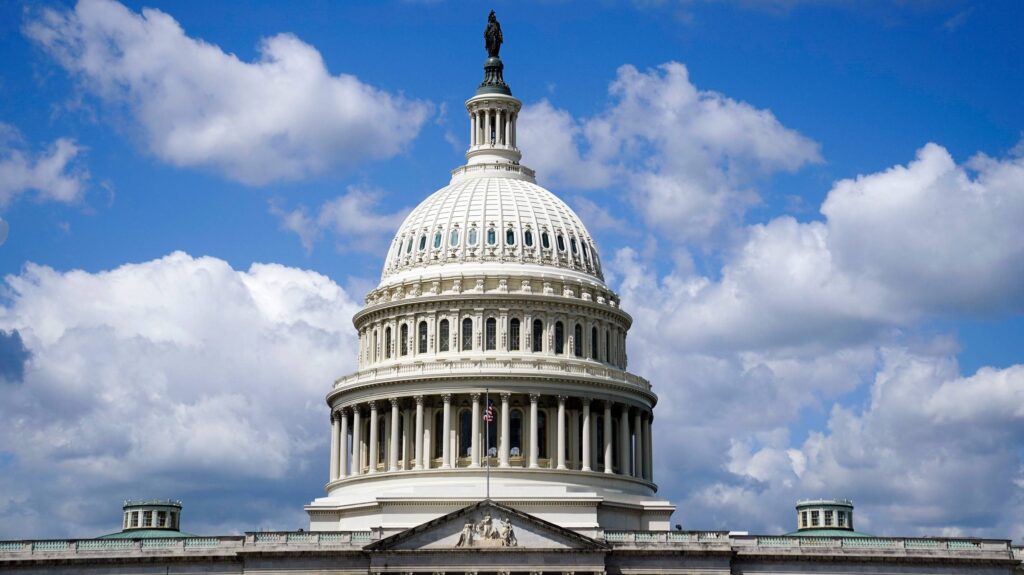
In a rare display of bipartisan unity, the U.S. Senate voted unanimously on Thursday to ban its own members and their staff from trading on prediction markets. The move, codified through S.Res.708, amends the Standing Rules of the Senate to explicitly prohibit the use of “event contracts” on platforms like Kalshi and Polymarket.
The resolution, which took effect immediately, represents a significant escalation in Washington’s efforts to curb insider trading and maintain public trust as these forecasting platforms reach record-breaking volumes.
A “Commonsense Step” for Public Trust
The resolution was introduced by Senator Bernie Moreno (R-Ohio) and significantly broadened by an amendment from Senator Alex Padilla (D-Calif.), the Ranking Member of the Senate Committee on Rules and Administration. While the original proposal targeted Senators, Padilla’s amendment ensures the restrictions apply to all officers and employees of the Senate.
“United States Senators have no business engaging in speculative activities like prediction markets while collecting a taxpayer-funded paycheck,” Senator Moreno said in a statement following the vote. “Serving in Congress should never be about finding new ways to profit; it should be about delivering results for the American people.”
Senator Padilla echoed this sentiment, highlighting specific instances that have recently shaken public confidence. “Politicians betting on their own races, massive wagers placed moments before the President announced a ceasefire in Iran, and suspected insider trading before the capture of Nicolás Maduro—these are just a few examples of the blatant corruption we’ve seen,” Padilla noted.
The Catalyst: From Military Missions to Ceasefires
The momentum for the ban reached a fever pitch following the indictment of Gannon Ken Van Dyke, a U.S. Army soldier accused of using classified intelligence regarding a mission to capture Venezuelan President Nicolás Maduro to net over $400,000 on Polymarket.
Lawmakers argued that the existing STOCK Act, which governs equity trading, was insufficient for the “high-velocity” nature of event contracts, where a single piece of non-public information — such as the exact timing of a policy announcement or a military strike — can result in instant, massive payouts.
The amended resolution now prohibits Senate members and staff from entering into any financial deal where the payout depends on the outcome of real-world events, including federal government actions and elections. Importantly, the rule clarifies that it does not prohibit traditional gaming, sports betting, or standard insurance agreements.
Industry Reaction: A Win for Platforms?
The major players in the prediction market space have largely welcomed the news. Kalshi CEO Tarek Mansour called the resolution a “great step to increase trust in our markets,” noting on X that his platform already proactively blocks members of Congress from trading.
Polymarket also expressed “full support,” stating that while its terms of service already prohibit such conduct, codifying the ban into law is a “step forward for the industry.”
Analysts suggest that by banning themselves, Senators are inadvertently legitimizing these platforms as financial markets rather than illegal gambling dens. This distinction is critical as the federal government remains locked in a legal chess match with states like Wisconsin over regulatory jurisdiction.
What’s Next: The House and the Executive Branch
The Senate’s action currently only applies to its own chamber as an internal rule change. However, S.Res.708 includes a “Sense of the Senate” urging the House of Representatives, the executive branch, and the judicial branch to adopt similar restrictions.
In that sense, Senate Minority Leader Chuck Schumer (D-N.Y.), urged President Donald Trump, his Administration, and the House of Representatives to adopt similar restrictions immediately. Schumer emphasized that the integrity of the U.S. government is at stake when officials can profit from non-public information regarding war, budgets, and legislation.
“There should be no wagering on predicting war, budgets, politics, and legislation by those who have a hand in shaping those outcomes,” Schumer stated in a press release. “The Senate has spoken with one voice; now it is time for President Trump and the House to ensure that no government official can use their position of public trust for private gain on these markets.”